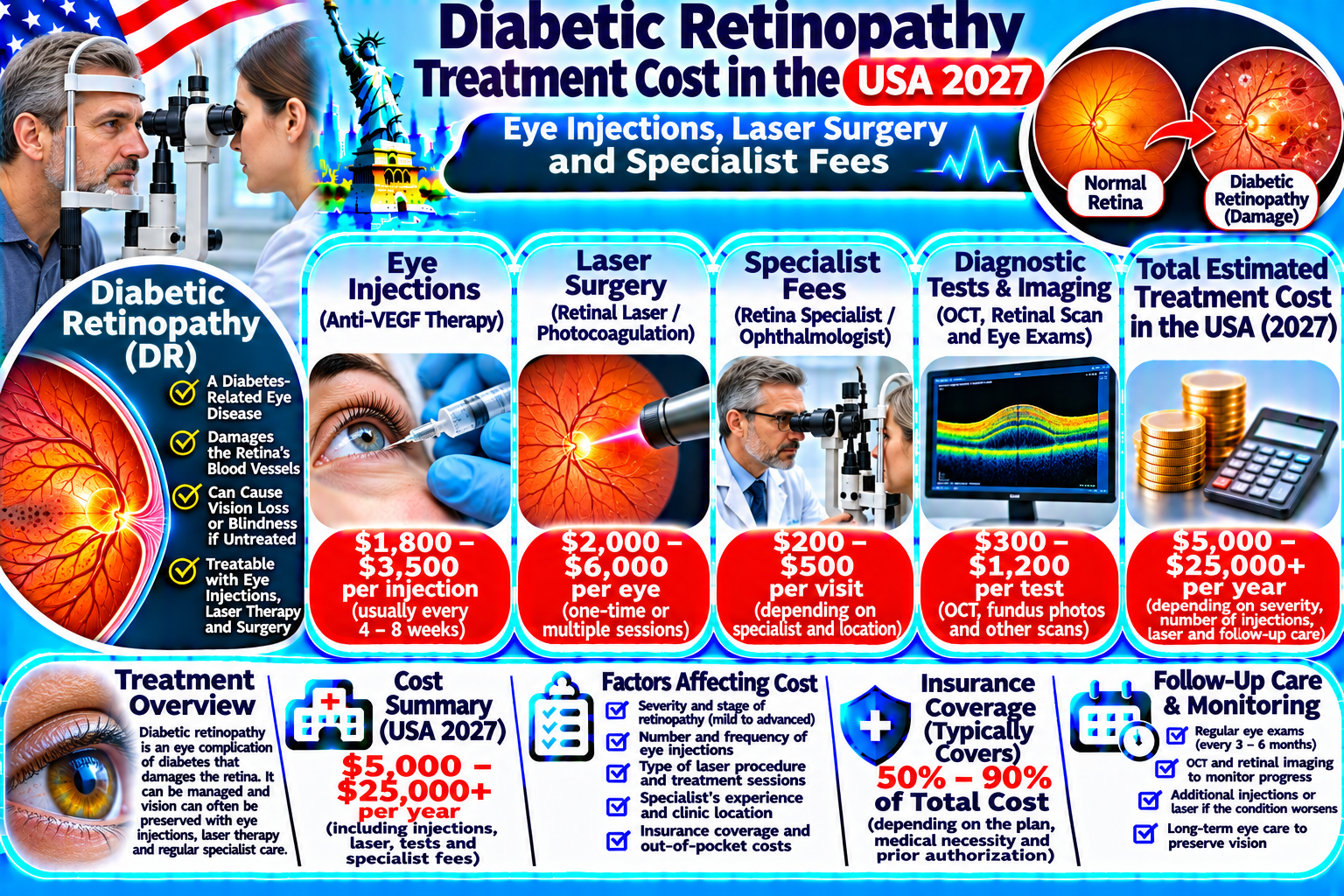
Introduction
Diabetic retinopathy treatment cost in the USA in 2027 is an important financial consideration for individuals living with diabetes and experiencing retinal damage, blurred vision, or other vision-related complications. Diabetic retinopathy is a progressive eye condition caused by damage to the small blood vessels responsible for supplying the retina.
Without timely diagnosis and appropriate medical management, diabetic retinopathy may lead to permanent vision impairment or blindness. Modern treatment options, including anti-VEGF eye injections, retinal laser therapy, corticosteroid treatments, and vitrectomy surgery, can help preserve eyesight and manage disease progression.
The cost of diabetic eye treatment in the United States varies considerably depending on disease severity, medication selection, specialist fees, diagnostic examinations, hospital facilities, and health insurance coverage.
This comprehensive guide explains estimated diabetic retinopathy treatment costs in 2027, including retinal examinations, injection expenses, laser surgery prices, insurance benefits, recovery requirements, and practical strategies for managing long-term eye care expenses.
What Is Diabetic Retinopathy?
Diabetic retinopathy develops when persistently elevated blood glucose levels damage the delicate blood vessels within the retina. These blood vessels may become blocked, weakened, or damaged, potentially causing blood and fluid to leak into retinal tissues.
The condition can affect people with either type 1 or type 2 diabetes. Its development is influenced by diabetes duration, blood glucose management, blood pressure, cholesterol levels, and other individual health factors.
Common symptoms associated with diabetic retinopathy include:
- Blurred or fluctuating vision.
- Dark spots or floating objects within the visual field.
- Difficulty seeing clearly in low-light environments.
- Reduced central vision.
- Dark or empty areas within the visual field.
- Progressive or sudden vision loss.
Early diabetic retinopathy may produce no noticeable symptoms. Regular comprehensive eye examinations are therefore essential for identifying retinal damage before substantial vision loss occurs.
Diabetic Retinopathy Treatment Cost in the USA 2027
The estimated cost of diabetic retinopathy treatment may range from a few hundred dollars for routine retinal monitoring to tens of thousands of dollars for repeated eye injections and advanced surgical intervention.
The following table provides illustrative 2027 financial planning estimates for diagnostic examinations and different diabetic retinopathy treatment options in the United States. Injection and surgical estimates generally refer to treatment of one eye.
| Treatment Category | Country | Estimated Cost |
|---|---|---|
| Initial Ophthalmologist Consultation | USA | $150–$400 |
| Retina Specialist Consultation | USA | $200–$600 |
| Dilated Eye Examination | USA | $100–$300 |
| Optical Coherence Tomography Scan | USA | $100–$400 |
| Fundus Photography | USA | $75–$250 |
| Fluorescein Angiography | USA | $250–$800 |
| Lower-Cost Anti-VEGF Injection Visit | USA | $200–$700 |
| Higher-Cost Anti-VEGF Injection Visit | USA | $1,500–$3,500+ |
| Corticosteroid Eye Injection | USA | $300–$2,500+ |
| Focal or Grid Laser Treatment | USA | $500–$2,000 |
| Panretinal Laser Photocoagulation | USA | $1,000–$4,000+ |
| Vitrectomy Surgery | USA | $5,000–$18,000+ |
| Complex Retinal Detachment Surgery | USA | $8,000–$25,000+ |
| Follow-Up Eye Examination | USA | $100–$350 |
These estimated prices are not confirmed national averages for 2027. Actual medical expenses depend on healthcare providers, insurance contracts, treatment requirements, medication purchasing arrangements, and geographical location.
Stages of Diabetic Retinopathy and Treatment Requirements
1. Mild Nonproliferative Diabetic Retinopathy
During the earliest stage, small abnormalities develop within retinal blood vessels. Patients may have normal vision and require periodic monitoring rather than immediate eye injections or surgery.
Appropriate diabetes management and scheduled retinal examinations can help reduce the risk of disease progression.
2. Moderate Nonproliferative Diabetic Retinopathy
As retinal blood vessel damage progresses, additional abnormalities may interfere with normal retinal circulation. More frequent examinations and specialist assessments may increase annual healthcare expenses.
3. Severe Nonproliferative Diabetic Retinopathy
Advanced blood vessel damage increases the risk of further retinal complications. Patients may require closer specialist supervision and, in selected circumstances, active treatment to protect vision.
4. Proliferative Diabetic Retinopathy
Proliferative diabetic retinopathy involves abnormal new blood vessel formation. These fragile vessels can bleed into the eye and contribute to scar tissue formation or retinal detachment.
Treatment may involve laser therapy, anti-VEGF injections, or vitrectomy surgery, depending on the severity and characteristics of the condition.
Understanding Diabetic Macular Edema
Diabetic macular edema occurs when fluid accumulates in the macula, the central retinal region responsible for detailed vision. It can develop during different stages of diabetic retinopathy and may interfere with reading, driving, and recognizing faces.
According to the American Diabetes Association’s 2026 clinical standards, anti-VEGF injections are generally the preferred initial treatment for diabetic macular edema affecting central vision when visual acuity is impaired.
Patients with preserved vision may sometimes qualify for careful observation instead of immediate injections, provided appropriate follow-up is maintained. Individual treatment decisions depend on clinical findings.
Anti-VEGF Eye Injection Treatment
Anti-VEGF medications inhibit vascular endothelial growth factor, a protein involved in abnormal blood vessel growth and vascular leakage. These medications are administered directly into the vitreous cavity by trained eye specialists.
Common medications used in retinal disease management include:
- Bevacizumab, frequently used off-label for diabetic macular edema.
- Ranibizumab-based retinal treatments.
- Aflibercept-based retinal treatments.
- Faricimab-based retinal treatments.
- Eligible biosimilar medications when clinically appropriate.
Drug prices vary considerably between available treatment options. Lower-cost medications may substantially reduce treatment expenses for suitable patients, while other medications may provide particular clinical advantages.
Patients frequently require repeated injections and retinal imaging. The number of treatments depends on visual improvement, retinal swelling, disease severity, and the selected medication regimen.
Published Eye Treatment Cost Research
A historical economic analysis associated with DRCR Retina Network Protocol V examined treatment expenses over two years for patients with center-involved diabetic macular edema and good initial visual acuity.
| Initial Management Strategy | Published Two-Year Cost |
|---|---|
| Initial Aflibercept Treatment | $17,330 |
| Initial Laser Treatment | $5,885 |
| Initial Observation | $6,917 |
These historical research estimates include subsequent treatments and monitoring where required. They are not 2027 price quotations and should not be used to select a treatment without considering the patient’s clinical circumstances.
Laser Surgery for Diabetic Retinopathy
Focal and Grid Laser Treatment
Focal or grid laser therapy targets selected retinal areas associated with fluid leakage. It may be considered for particular cases of persistent macular edema or when alternative treatment approaches are unsuitable.
Panretinal Photocoagulation
Panretinal photocoagulation treats wider areas of the retina to reduce the stimulus for abnormal blood vessel growth. It remains an important treatment for high-risk proliferative diabetic retinopathy.
Patients may require more than one laser session. Potential effects include changes in peripheral or nighttime vision, making individualized assessment important.
Vitrectomy Surgery for Advanced Diabetic Retinopathy
Vitrectomy is an advanced surgical procedure used to address complications such as persistent bleeding inside the eye, retinal traction, and certain retinal detachments.
The surgeon removes vitreous gel and may treat scar tissue or repair associated retinal abnormalities. Surgery is generally performed in a hospital or specialized surgical facility.
Complexity, anesthesia, surgical materials, and postoperative monitoring contribute to overall vitrectomy expenses.
Diagnostic Tests Before Retinal Treatment
Accurate retinal assessment helps specialists determine whether observation, medication, laser treatment, or surgery is appropriate.
- Dilated examinations allow detailed inspection of retinal structures.
- Optical coherence tomography measures retinal thickness and fluid accumulation.
- Fundus photography documents visible retinal abnormalities.
- Fluorescein angiography evaluates retinal blood vessel circulation and leakage.
- Selected ultrasound examinations assess internal eye structures when direct visualization is difficult.
Diagnostic requirements vary between patients. Some tests may need to be repeated throughout treatment to evaluate clinical progress and guide subsequent medical decisions.
Factors Influencing Diabetic Retinopathy Treatment Costs in 2027
Several clinical, pharmaceutical, geographical, and financial considerations determine the overall cost of diabetic retinopathy treatment throughout the United States. Understanding these factors can help patients prepare realistic healthcare budgets.
1. Severity of Retinal Damage
Early-stage diabetic retinopathy may require routine examinations and diabetes management. Advanced disease may require repeated injections, laser procedures, or complex retinal surgery, increasing overall expenses.
2. Anti-VEGF Medication Selection
Medication selection represents a major financial component of diabetic macular edema treatment. Different drugs have different purchasing prices, reimbursement arrangements, dosing requirements, and available assistance programs.
3. Number of Eye Injections
Patients requiring frequent injections may experience substantially higher annual treatment expenses. Some individuals respond sufficiently to extended treatment intervals, while others require closer monitoring and ongoing therapy.
4. Ophthalmologist and Retina Specialist Fees
Specialist charges vary according to professional experience, geographical location, medical complexity, and insurance contracts. Patients with advanced retinal complications may require specialized surgical expertise.
5. Hospital and Treatment Facility Charges
Hospital outpatient departments may charge higher facility fees than independent ophthalmology clinics. Surgical procedures also involve operating room expenses, anesthesia, nursing services, and medical equipment.
6. Health Insurance Coverage
Insurance policies determine patient responsibilities for deductibles, specialist copayments, medication coinsurance, and noncovered services. Prior authorization and preferred medication requirements may influence treatment access.
7. Treatment of Both Eyes
Diabetic retinopathy can affect both eyes. Patients requiring bilateral injections or laser therapy may experience higher expenses, although combined appointments and insurance payment arrangements can affect total charges.
8. Existing Medical Conditions
Kidney disease, uncontrolled blood pressure, cardiovascular complications, and other diabetes-related conditions may require coordinated medical management. These associated healthcare requirements can increase overall financial responsibilities.
Annual Eye Injection Treatment Costs in the USA 2027
The following table demonstrates how repeated injections may influence annual treatment expenses. Calculations assume hypothetical injection visit charges of $400 for a lower-cost treatment and $2,500 for a higher-cost treatment.
| Number of Injections Per Eye | Lower-Cost Treatment | Higher-Cost Treatment |
|---|---|---|
| 3 Injections | $1,200 | $7,500 |
| 4 Injections | $1,600 | $10,000 |
| 6 Injections | $2,400 | $15,000 |
| 8 Injections | $3,200 | $20,000 |
| 10 Injections | $4,000 | $25,000 |
| 12 Injections | $4,800 | $30,000 |
These calculations exclude separately billed retinal imaging, additional consultations, and unrelated medical services. Actual injection frequency must be determined by a qualified retina specialist rather than financial considerations alone.
Laser Eye Surgery and Hospital Fee Breakdown
Patients requiring laser procedures or vitrectomy surgery may receive separate bills for professional services, surgical facilities, anesthesia, and postoperative care.
| Medical Expense | Illustrative 2027 Cost |
|---|---|
| Preoperative Eye Assessment | $150–$500 |
| Retinal Surgeon Professional Fee | $1,000–$4,000+ |
| Surgical Facility Charges | $3,000–$10,000+ |
| Anesthesia Services for Surgery | $300–$1,500+ |
| Retinal Surgical Materials | $300–$2,000+ |
| Postoperative Eye Medications | $30–$250 |
| Postoperative Specialist Examination | $100–$350 |
Some healthcare providers combine these expenses into comprehensive surgical packages. Routine office-based laser treatment generally does not require all the services listed above. Patients should obtain itemized quotations to avoid double-counting expenses.
Eye Injections vs Laser Treatment vs Vitrectomy
| Treatment Feature | Eye Injections | Laser Treatment | Vitrectomy |
|---|---|---|---|
| Estimated Cost | $200–$3,500+ Per Visit | $500–$4,000+ | $5,000–$18,000+ |
| Primary Purpose | Control Retinal Swelling and Abnormal Vessels | Manage Selected Retinal Abnormalities | Treat Advanced Retinal Complications |
| Treatment Frequency | Often Repeated | One or More Sessions | Usually Individual Surgical Episodes |
| Treatment Setting | Eye Clinic | Outpatient Eye Facility | Hospital or Surgical Center |
| Recovery Requirements | Generally Limited | Short-Term Monitoring | Several Weeks or Longer |
These treatments serve different medical purposes and are not interchangeable in every situation. Some patients require combined approaches to achieve appropriate disease control.
Does Health Insurance Cover Diabetic Retinopathy Treatment?
Many comprehensive health insurance arrangements in the United States provide coverage for medically necessary retinal disease treatment. Benefits commonly include qualifying specialist appointments, diagnostic examinations, eye injections, laser treatment, and surgical procedures.
Private Health Insurance
Private insurance coverage depends on individual medical benefits, provider networks, approved medication policies, and patient cost-sharing requirements. Insurers may require authorization before approving selected retinal treatments.
Medicare Coverage
Medicare Part B covers an annual diabetic retinopathy examination for eligible beneficiaries with diabetes. After meeting the applicable deductible, individuals with Original Medicare generally pay 20% of the Medicare-approved amount for physician services.
Qualifying physician-administered retinal medications and procedures may also receive Part B coverage. Supplemental insurance may help reduce eligible personal expenses.
Medicaid Coverage
Medicaid may provide medically necessary diabetic eye treatment for eligible beneficiaries. Available ophthalmology providers, payment arrangements, and authorization requirements vary according to state programs.
Example of Diabetic Retinopathy Expenses With Insurance
Consider a hypothetical patient receiving one year of retinal treatment with $18,000 in eligible negotiated medical expenses. Assume the patient has a $1,500 remaining deductible and 20% coinsurance.
| Financial Category | Example Amount |
|---|---|
| Eligible Annual Treatment Expenses | $18,000 |
| Remaining Insurance Deductible | $1,500 |
| Patient Coinsurance | $3,300 |
| Health Insurance Payment | $13,200 |
| Total Patient Responsibility | $4,800 |
This calculation assumes covered in-network treatment within one insurance plan year and no lower applicable out-of-pocket spending maximum. Insurance premiums and noncovered expenses are excluded.
Recovery After Diabetic Retinopathy Treatment
Recovery After Eye Injections
Patients may experience temporary irritation, mild discomfort, or redness following an intravitreal injection. Most routine activities can generally resume according to the eye specialist’s instructions.
Recovery After Laser Therapy
Laser treatment may temporarily affect visual clarity. Patients should arrange appropriate transportation and follow medical advice concerning driving, work, and other activities.
Recovery After Vitrectomy Surgery
Recovery may require several weeks, depending on surgical complexity and retinal health. Patients may need prescribed eye drops, protective equipment, activity restrictions, and repeated postoperative examinations.
If an intraocular gas bubble is used, specific positioning and travel restrictions may apply. Patients must avoid air travel until their surgeon confirms that the gas bubble has completely disappeared.
Long-Term Monitoring and Follow-Up Expenses
Diabetic retinopathy requires continued medical monitoring even after successful treatment. Diabetes-related retinal damage can progress or recur, making regular examinations important for maintaining visual health.
Long-term expenses may include specialist appointments, repeated retinal imaging, additional injections, prescription medications, transportation, and assistance with daily activities.
Individuals receiving ongoing treatment should establish a healthcare budget that considers future medical needs rather than focusing exclusively on the initial procedure.
Potential Complications and Additional Treatment Costs
Retinal treatments can help preserve eyesight, but medical complications remain possible. Potential complications include:
- Persistent or recurrent retinal swelling.
- Bleeding within the vitreous cavity.
- Increased pressure inside the eye.
- Cataract development or progression after selected treatments.
- Retinal detachment.
- Eye infection following an injection or surgical procedure.
- Additional treatment requirements following incomplete improvement.
Patients experiencing sudden vision loss, severe eye pain, increasing redness, or rapidly developing visual disturbances should seek urgent ophthalmic assessment.
Financial Assistance for Diabetic Retinopathy Treatment
Patients experiencing financial difficulties may qualify for assistance through healthcare organizations, government programs, pharmaceutical companies, or independent charitable foundations.
Potential financial assistance options include:
- Pharmaceutical manufacturer patient assistance programs.
- Eligible commercial insurance copayment assistance.
- Independent nonprofit financial assistance foundations.
- Hospital charity care and financial assistance programs.
- Medicare Savings Programs for eligible beneficiaries.
- State Medicaid healthcare assistance.
- Community health centers providing affordable diabetic eye screening.
- Flexible hospital payment arrangements.
Eligibility depends on income, insurance coverage, residency, and program requirements. Manufacturer copayment coupons generally cannot be used with federal insurance programs such as Medicare or Medicaid.
How to Reduce Diabetic Retinopathy Treatment Costs
- Schedule recommended diabetic retinal examinations before symptoms become severe.
- Compare written treatment estimates from qualified retina specialists.
- Confirm insurance coverage for proposed medications and procedures.
- Discuss clinically appropriate lower-cost medication alternatives.
- Use participating healthcare facilities whenever medically appropriate.
- Review specialist copayments and annual deductibles.
- Investigate available medication assistance programs.
- Request itemized surgical and diagnostic quotations.
- Maintain appropriate blood glucose and blood pressure management.
- Attend scheduled monitoring and follow-up appointments.
Patients should never postpone necessary retinal injections or surgery solely to reduce expenses without discussing the potential consequences with their treating specialist. Delayed treatment may result in irreversible vision damage and greater future healthcare costs.
Importance of Early Diabetic Retinopathy Detection
Early detection can help identify retinal abnormalities before substantial visual impairment occurs. Appropriate diabetes management, regular eye screening, blood pressure control, and timely specialist referrals may reduce the risk of advanced retinal complications.
Preventing severe vision impairment may also reduce indirect financial expenses associated with lost employment, transportation assistance, reduced independence, and long-term rehabilitation requirements.
Frequently Asked Questions
How much does diabetic retinopathy treatment cost in the USA in 2027?
Illustrative treatment costs range from $150 to $600 for specialist consultations, $200 to $3,500 or more for injection visits, and $5,000 to $18,000 or more for vitrectomy surgery.
How much do diabetic retinopathy eye injections cost?
Estimated injection visit expenses range from $200 to $3,500 or more per eye, depending on medication selection, professional fees, and insurance arrangements.
How much does laser surgery for diabetic retinopathy cost?
Illustrative laser treatment expenses range from $500 to $4,000 or more, depending on treatment type, facility charges, and the number of required sessions.
Can diabetic retinopathy be completely cured?
Available treatments can help control retinal disease and preserve or improve vision in some patients. However, established retinal damage may be permanent, and ongoing diabetes management remains necessary.
Does Medicare cover diabetic eye injections?
Medicare Part B may cover qualifying physician-administered eye injections when medical necessity and applicable coverage requirements are satisfied.
How many eye injections are required?
The number varies considerably according to retinal swelling, disease severity, medication choice, and treatment response. Some patients require frequent injections initially, followed by longer treatment intervals.
Can diabetic retinopathy cause permanent blindness?
Yes. Advanced untreated diabetic retinopathy can cause severe and irreversible vision loss. Timely diagnosis and appropriate medical treatment can help reduce this risk.
Conclusion
Diabetic retinopathy treatment cost in the USA in 2027 depends on disease severity, anti-VEGF medication prices, laser surgery expenses, specialist fees, hospital facilities, and insurance coverage.
While early retinal monitoring may involve relatively modest expenses, advanced disease can require repeated eye injections and complex surgical procedures costing thousands of dollars.
Regular diabetic eye examinations, appropriate disease management, careful insurance planning, and timely specialist treatment can help patients protect their eyesight while managing long-term healthcare expenses.
Disclaimer: All projected 2027 prices are illustrative financial planning estimates rather than guaranteed medical quotations or verified nationwide averages. Historical research figures are provided for educational comparison. Individual treatment decisions should be made with qualified ophthalmologists and retina specialists.
Information
