Introduction
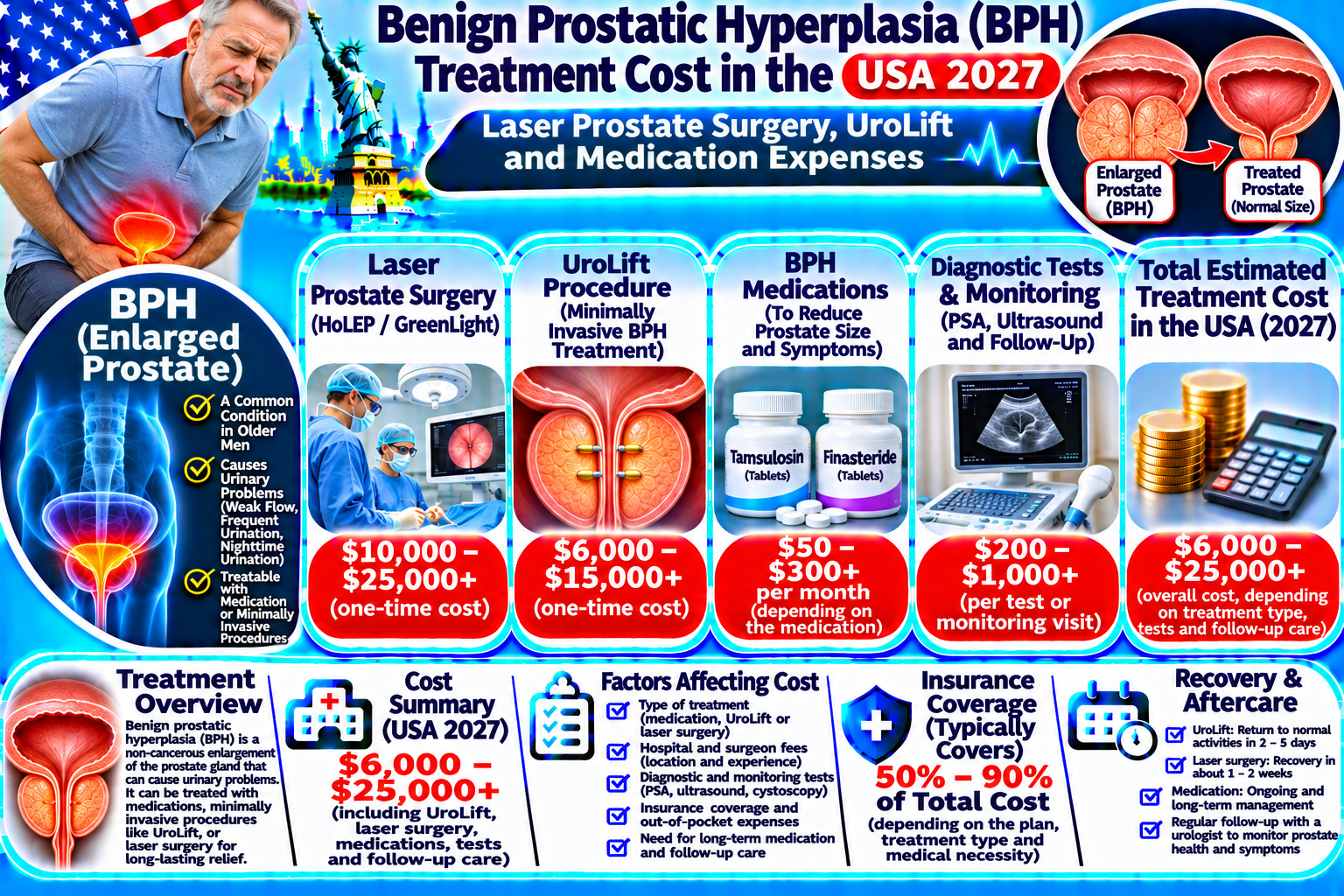
Benign prostatic hyperplasia treatment cost in the USA in 2027 is an important financial consideration for men experiencing prostate enlargement, urinary difficulties, and related medical complications. Benign prostatic hyperplasia, commonly known as BPH, is a noncancerous enlargement of the prostate gland that becomes increasingly common with advancing age.
An enlarged prostate can restrict urine flow, interfere with bladder function, and negatively affect daily activities and sleep quality. Modern treatment options include prescription medications, minimally invasive procedures, laser prostate surgery, and traditional surgical interventions.
American healthcare costs for BPH treatment vary depending on disease severity, urologist fees, hospital facilities, medication selection, and insurance coverage.
This comprehensive guide explains estimated prostate enlargement treatment costs in 2027, including laser surgery, UroLift procedures, diagnostic examinations, specialist consultations, and recovery expenses.
What Is Benign Prostatic Hyperplasia?
Benign prostatic hyperplasia occurs when prostate tissue grows and places pressure on the urethra. This enlargement can interfere with normal urine flow and prevent complete bladder emptying.
Common symptoms associated with BPH include:
- Frequent urination during daytime and nighttime.
- Difficulty starting urination.
- Weak or interrupted urine flow.
- Sudden and urgent need to urinate.
- Incomplete bladder emptying.
- Dribbling after urination.
- Urinary retention in more severe cases.
BPH is not prostate cancer, although both conditions can occur simultaneously. Medical evaluation is necessary to identify the underlying cause of urinary symptoms and determine appropriate treatment.
Benign Prostatic Hyperplasia Treatment Cost in the USA 2027
Prostate enlargement treatment expenses may range from relatively affordable monthly medication costs to several thousand dollars for advanced surgical procedures.
The following table provides illustrative financial planning estimates for BPH diagnosis, medication, and surgical treatment in the United States during 2027.
| Treatment Category | Country | Estimated Cost |
|---|---|---|
| Urologist Consultation | USA | $150–$500 |
| PSA Blood Test | USA | $30–$150 |
| Prostate Ultrasound | USA | $200–$800 |
| Urine Flow Testing | USA | $100–$350 |
| Cystoscopy Examination | USA | $500–$2,500 |
| BPH Medications Per Month | USA | $10–$250+ |
| UroLift Procedure | USA | $3,500–$10,000+ |
| Water Vapor Therapy | USA | $2,500–$7,500+ |
| Laser Prostate Vaporization | USA | $5,000–$15,000+ |
| HoLEP Laser Surgery | USA | $6,000–$18,000+ |
| TURP Surgery | USA | $5,000–$16,000+ |
| Simple Prostatectomy | USA | $15,000–$40,000+ |
These figures are illustrative budgeting estimates rather than confirmed 2027 national averages. Actual treatment expenses may fall outside these ranges depending on insurance contracts, medical circumstances, and healthcare facilities.
Published Prostate Surgery Cost Benchmarks
A 2026 study published in Urology Practice examined BPH procedure pricing across leading American hospitals. Researchers identified substantial differences in hospital charges and commercial insurance reimbursement.
| Procedure | Published Median Amount | Price Category |
|---|---|---|
| Prostatic Urethral Lift | $4,489 | Hospital Charge |
| Transurethral Waterjet Ablation | $15,742 | Hospital Charge |
| TURP Surgery | $4,258.94 | Commercial Reimbursement |
Hospital charges and insurance reimbursement represent different financial measurements. Neither necessarily equals the amount an individual patient must pay.
Types of Benign Prostatic Hyperplasia Treatment
1. Prescription Medication Therapy
Medication is frequently recommended for patients experiencing bothersome urinary symptoms. Alpha blockers relax muscles around the prostate and bladder outlet, while 5-alpha reductase inhibitors can gradually reduce prostate size in suitable patients.
Combination therapy may provide additional benefits for selected individuals but can increase monthly medication expenses.
2. Laser Prostate Surgery
Laser prostate surgery uses specialized energy to remove or vaporize obstructive prostate tissue. Photoselective vaporization is one established laser treatment option for improving urinary flow.
Expenses depend on surgical equipment, prostate size, anesthesia requirements, and treatment facility charges.
3. Holmium Laser Enucleation of the Prostate
HoLEP involves separating enlarged prostate tissue from surrounding structures using laser technology. It can provide durable urinary symptom improvement and is suitable for a wide range of prostate sizes.
Specialized equipment and surgical expertise influence overall treatment expenses.
4. UroLift Procedure
UroLift is a minimally invasive prostatic urethral lift procedure that uses small implants to hold obstructive prostate tissue away from the urethra.
The procedure may be performed in an outpatient setting. It can help preserve ejaculatory function in selected patients, although additional treatment may eventually become necessary.
5. Water Vapor Thermal Therapy
Water vapor therapy delivers controlled thermal energy to targeted prostate tissue. The treated tissue gradually reduces in volume, helping improve urine flow over time.
6. Transurethral Resection of the Prostate
TURP is an established surgical procedure that removes obstructive prostate tissue through the urethra. Depending on medical circumstances, patients may require temporary catheterization and hospital monitoring.
Diagnostic Examinations Before BPH Treatment
Accurate diagnosis helps healthcare professionals identify prostate enlargement, assess urinary symptoms, and exclude other medical conditions.
- Physical examination and medical history assessment.
- Urinalysis to evaluate infection and other abnormalities.
- PSA testing when clinically appropriate.
- Ultrasound examinations to assess prostate size.
- Post-void residual urine measurement.
- Urine flow studies and selected bladder examinations.
Not every patient requires every diagnostic procedure. Urologists recommend examinations according to symptoms, medical history, and proposed treatment.
When Is Prostate Surgery Necessary?
Surgery may be recommended when medications provide insufficient relief, urinary symptoms significantly affect quality of life, or prostate enlargement causes recurrent urinary retention and other complications.
Treatment decisions should consider prostate anatomy, bladder function, general health, sexual function preferences, and expected long-term outcomes.
Factors Influencing BPH Treatment Costs in 2027
Several medical, pharmaceutical, geographical, and financial considerations influence benign prostatic hyperplasia treatment expenses throughout the United States.
1. Prostate Size and Disease Severity
Larger prostates and advanced urinary obstruction may require more complex treatment. Patients experiencing bladder damage, recurrent infections, or urinary retention may need additional medical services.
2. Selected Surgical Technique
Laser surgery, implant-based procedures, and traditional surgical treatments involve different equipment, specialist expertise, and facility requirements. These differences influence overall treatment prices.
3. Urologist and Specialist Fees
Professional charges depend on specialist experience, geographical location, treatment complexity, and insurance reimbursement arrangements.
4. Hospital and Facility Charges
Hospital outpatient departments may have higher facility fees than independent surgical centers. Overnight hospitalization can further increase medical expenses.
5. Health Insurance Coverage
Insurance benefits determine patient responsibilities for deductibles, copayments, coinsurance, and noncovered services. Medical necessity documentation and prior authorization may be required.
6. Medication Selection
Generic medications generally cost less than branded pharmaceutical products. Patients requiring multiple prescriptions or prolonged treatment may experience higher cumulative expenses.
BPH Medication Expenses in the USA 2027
Prescription medications can help manage urinary symptoms and reduce prostate-related complications. Treatment may continue for several years when medications remain effective.
| Medication Category | Estimated Monthly Cost | Estimated Annual Cost |
|---|---|---|
| Generic Tamsulosin | $10–$40 | $120–$480 |
| Generic Finasteride | $10–$50 | $120–$600 |
| Generic Dutasteride | $15–$70 | $180–$840 |
| Generic Tadalafil | $15–$100 | $180–$1,200 |
| Combination Medication Therapy | $30–$150+ | $360–$1,800+ |
| Selected Brand-Name Medications | $100–$250+ | $1,200–$3,000+ |
These hypothetical medication prices vary according to pharmacy, prescription quantity, insurance benefits, and available discounts. Patients should not change prescribed medications without professional medical guidance.
Laser Prostate Surgery Hospital Fee Breakdown
| Medical Expense | Illustrative 2027 Cost |
|---|---|
| Urological Surgeon Fee | $1,000–$4,000+ |
| Operating Room and Facility Charges | $3,000–$10,000+ |
| Anesthesia Services | $500–$2,000 |
| Preoperative Laboratory Tests | $100–$500 |
| Additional Hospital Stay Per Day | $2,000–$6,000+ |
| Postoperative Medications | $30–$250 |
| Follow-Up Consultation | $100–$350 |
Some surgical packages combine professional fees, anesthesia, equipment, and facility charges. Patients should request itemized estimates to avoid double-counting medical expenses.
UroLift Procedure vs Laser Prostate Surgery
| Treatment Feature | UroLift | Laser Surgery |
|---|---|---|
| Estimated Procedure Cost | $3,500–$10,000+ | $5,000–$18,000+ |
| Treatment Method | Implant-Based Tissue Retraction | Laser Tissue Removal |
| Treatment Setting | Usually Outpatient | Outpatient or Short Hospital Stay |
| Initial Recovery | Generally Shorter | Days to Several Weeks |
| Ejaculatory Function | Generally Better Preserved | Changes Can Be Common |
Neither procedure is universally suitable. Patients should discuss anatomical eligibility, expected symptom improvement, potential complications, and retreatment risks with their urologist.
Does Health Insurance Cover BPH Treatment?
Many comprehensive American health insurance plans cover medically necessary prostate enlargement treatment, including diagnostic examinations, prescription medications, and qualifying surgical procedures.
Medicare may cover eligible BPH procedures when applicable medical requirements are satisfied. Medicare Part D may provide coverage for prescribed outpatient medications according to the plan’s formulary.
Patients should confirm insurance network participation, remaining deductibles, authorization requirements, prescription benefits, and annual out-of-pocket spending limits before scheduling treatment.
Example of BPH Surgery Expenses With Insurance
Consider a hypothetical patient receiving laser prostate surgery with $12,000 in eligible negotiated medical expenses, a $1,500 remaining deductible, and 20% coinsurance.
| Financial Category | Example Amount |
|---|---|
| Eligible Treatment Expenses | $12,000 |
| Patient Deductible | $1,500 |
| Patient Coinsurance | $2,100 |
| Insurance Payment | $8,400 |
| Total Patient Responsibility | $3,600 |
This example assumes covered in-network treatment and no lower applicable out-of-pocket maximum. Insurance premiums and unrelated medical expenses are excluded.
Recovery Expenses After Prostate Treatment
Recovery requirements vary according to the selected treatment, prostate size, and individual medical circumstances. Minimally invasive procedures may allow relatively quick recovery, while more extensive surgical treatments may require several weeks.
Additional recovery expenses may include temporary catheter supplies, prescribed medications, follow-up examinations, transportation, and time away from employment.
Patients experiencing an inability to urinate, fever, severe pain, or heavy bleeding after treatment should seek prompt medical attention.
How to Reduce Benign Prostatic Hyperplasia Treatment Costs
- Compare written treatment estimates from multiple urology facilities.
- Discuss medically appropriate generic medication alternatives.
- Confirm insurance coverage before scheduling procedures.
- Consider outpatient surgical centers when medically appropriate.
- Ask whether procedure quotations include implants and anesthesia.
- Investigate hospital financial assistance programs.
- Use eligible HSA or FSA funds for qualified medical expenses.
- Attend recommended follow-up examinations.
Comparing long-term medication expenses with surgical costs and potential retreatment requirements can support informed financial planning.
Frequently Asked Questions
How much does BPH treatment cost in the USA in 2027?
Illustrative medication expenses begin around $10 monthly, while surgical treatment may cost several thousand dollars depending on the procedure and healthcare facility.
How much does laser prostate surgery cost?
Estimated laser prostate treatment expenses range from $5,000 to $18,000 or more, depending on surgical technique and medical complexity.
Is UroLift covered by health insurance?
Many insurance arrangements may cover qualifying prostatic urethral lift procedures. Patients must verify individual medical eligibility and policy requirements.
Can an enlarged prostate be treated without surgery?
Yes. Selected patients may manage symptoms through observation, lifestyle adjustments, and prescription medications under professional medical supervision.
Is laser prostate surgery a permanent solution?
Laser procedures can provide durable symptom improvement, but recurrent symptoms and additional treatment remain possible.
Conclusion
Benign prostatic hyperplasia treatment cost in the USA in 2027 depends on medication expenses, laser prostate surgery techniques, UroLift implant costs, hospital charges, and insurance benefits.
Early medical evaluation, appropriate treatment selection, and careful financial planning can help patients manage urinary symptoms while reducing unnecessary healthcare expenses. Comparing available treatment options with a qualified urologist remains essential for achieving suitable long-term outcomes.
Disclaimer: All projected 2027 prices are illustrative financial planning estimates rather than guaranteed medical quotations. Published 2026 research figures represent historical hospital charges and insurance reimbursement measurements.
Information Source: The Reality of Benign Prostatic Hyperplasia Surgery Price and Reimbursement Across Top United States Hospitals, Urology Practice, 2026.
